Bumble
At Bumble I was the lead for the Core Dating Experience team. Below is a sample of 2 of the projects delivered as part of my work there:
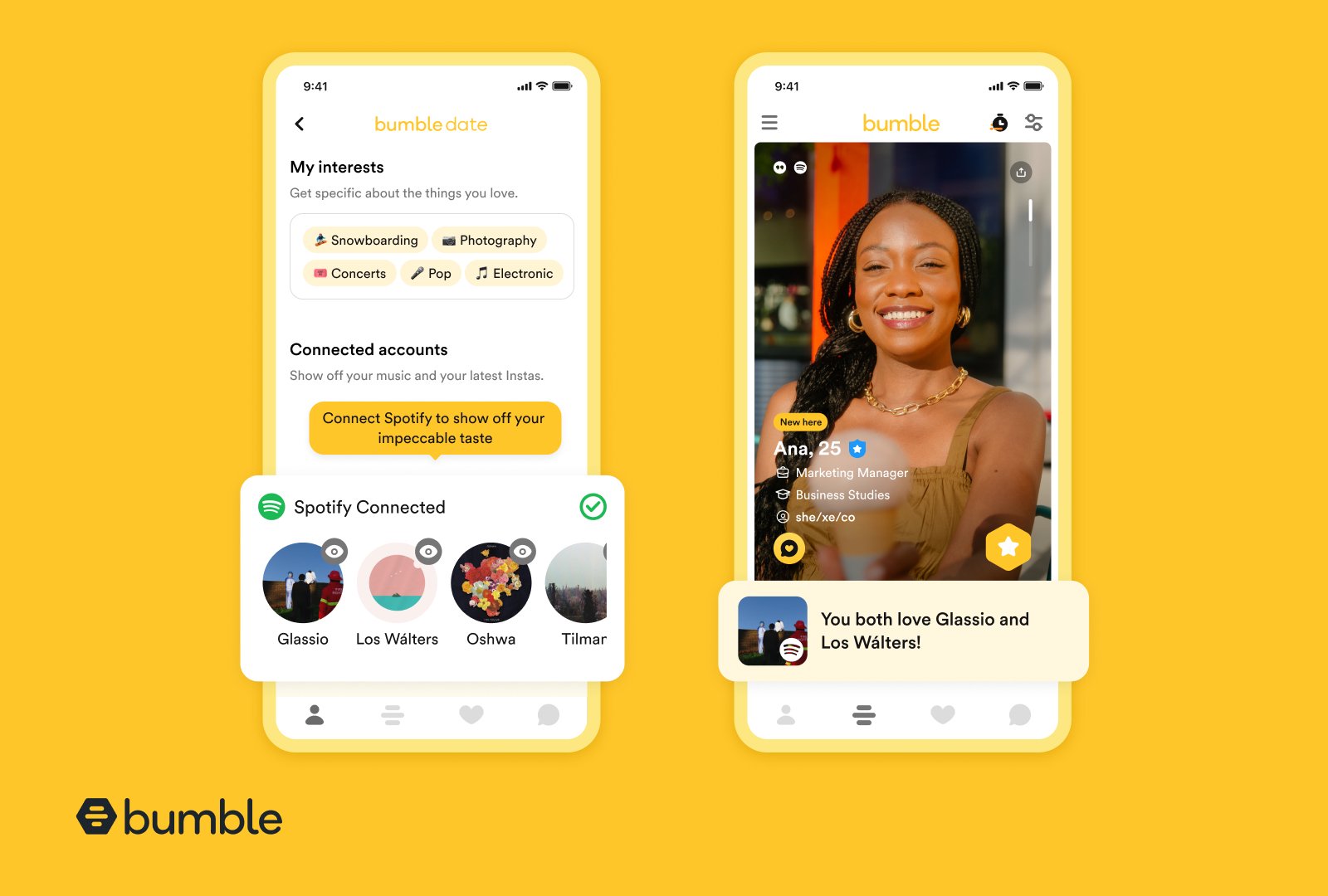
Surfacing compatibility signals above the fold
Swiping Experience Redesign
Problem: In dating apps a major problem is unequal distribution of activity. A minority of popular users tend to get most of the likes. This results in most men struggling to get a match and churning when they don't, and women feeling the app shows them an overwhelming number of irrelevant profiles.
At Bumble, I led the team responsible for addressing this problem through the core swiping UX. Data analysis revealed that when women were swiping no, this happened almost exclusively based on the first photo, without scrolling to consider additional content. However testing quickly revealed that slowing down time per swipe by encouraging consideration per swipe significantly impacted total swipes per user. This posed a constaint, as in the product swipe volume is intrinsically tied to monetisation.
Solution: The goal was accordingly to turn no votes into yes votes with minimal impact to time per swipe. Within this context, I introduced glanceable UX patterns to flexibly inject non-appearance-based points of relevance above the fold on profiles identified as high potential (in partnership with the Data Science team). This approach successfully increased the % of men with a yes swipe received by 8pp.
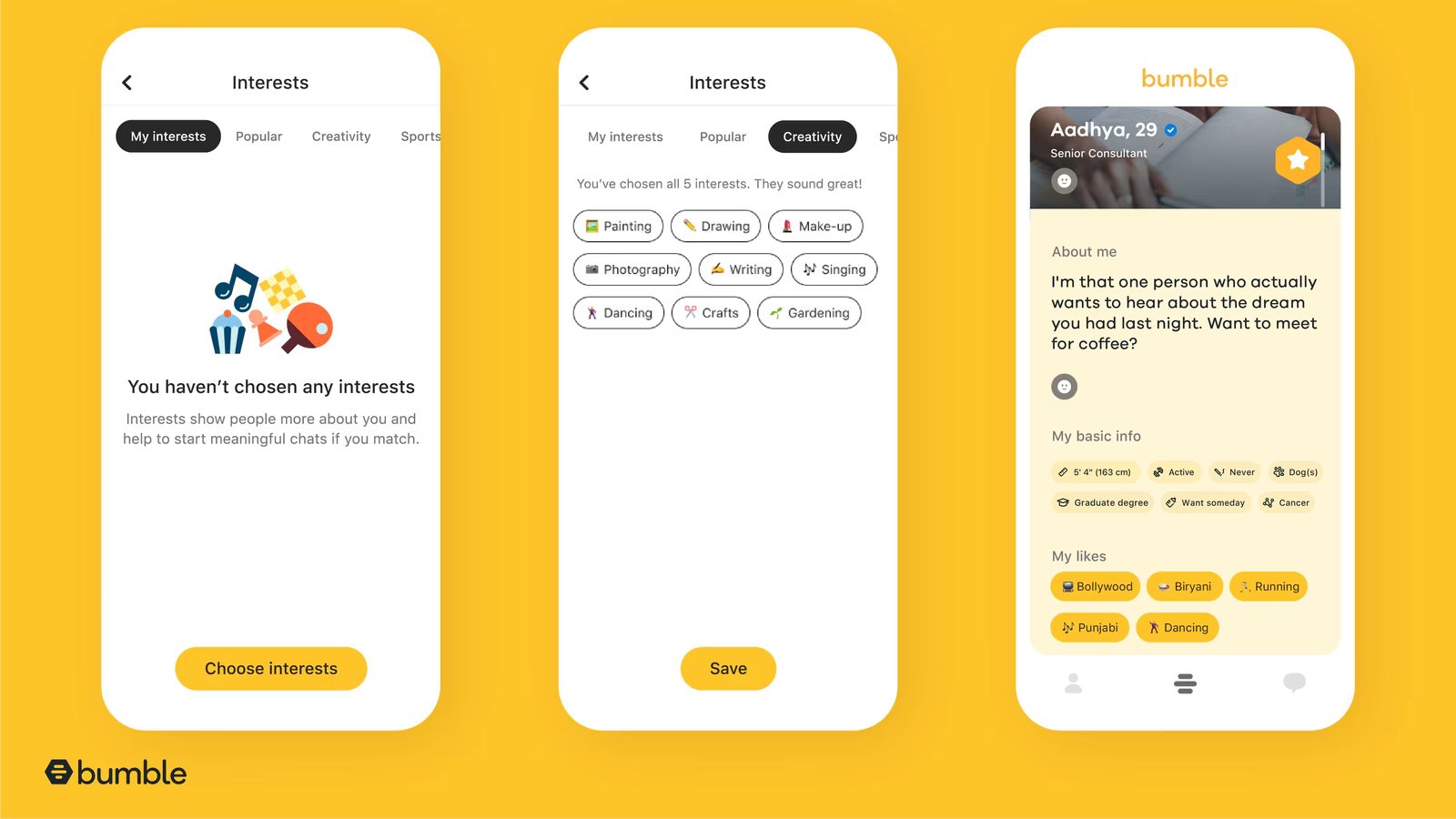
Interest selection flow and how badges appear on profiles
Interest Badges
Problem: An additional issue revealed in research was that a majority of men struggled with knowing what to add to their profile (faced with the "blank page" problem), and women struggled to understand who men were from the sparse nature of their profiles. This was in particular an issue as we needed to ensure profiles held potential signals of compatibility which we could reveal, for the UX injections proposed above to work.
Solution: Based on this, I introduced a new content type: "Interest badges". The goal was to make it easier for men to add content to their profiles, while providing women with signal of a man's overall character and lifestyle without increasing their time per swipe. Interest Badges were a success and became the fastest-adopted profile content type in Bumble's history.
Outcome
- Increased the % of men with a yes swipe received by 8pp
- Contributed to +20% MAU and +22.8% revenue YoY